This month, I offer a lovely poem, written this April, by Adele Ne Jame, a first-generation Lebanese American who has lived in Hawai’i since 1969 and who is a frequent contributor to this Journal. She has written extensively about Hawai’i and Lebanon in her poetry collections, including Field Work, The South Wind, Poems, Land and Spirit, and in her new manuscript, First Night at the Beirut Commodore and Other Poems. She has taught poetry at the university level in Hawai’i since 1986, and she has served as the Poet-in-Residence at the University of Wisconsin-Madison. Her work has been published in journals such as the Georgetown Review, Ploughshares, Atlanta Review, Nimrod, the Denver Quarterly, Poetry Kanto, and the Notre Dame Review. Her many awards include a National Endowment for the Arts in Poetry, a Pablo Neruda Poetry Prize, a Robinson Jeffers Tor House Prize and an Eliot Cades Award for Literature. Her poems have been exhibited as broadsides at the Sharjah/ Dubai International Biennial, UAE and at the Arab American National Museum, Dearborn, Michigan. She is one of the world’s most brilliant poets, with revelatory perspectives and genius.
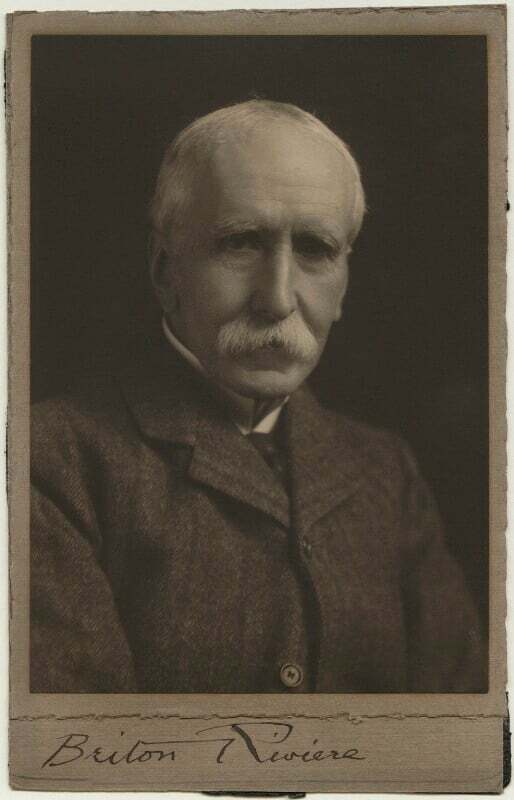
The poem below was inspired by the oil on canvas painting by British artist Briton Rivière (1840-1920). Rivière was a prominent Victorian painter of Huguenot descent. Born in London, educated at Oxford, he was taught almost exclusively by his father. He became celebrated as an artist for his masterful animal paintings. He is deeply important for elevating animal portraiture, imbuing his subjects with profound psychological emotion, depth, and moral tension in order to explore the complex relationship between humans and nature.
.jpg)
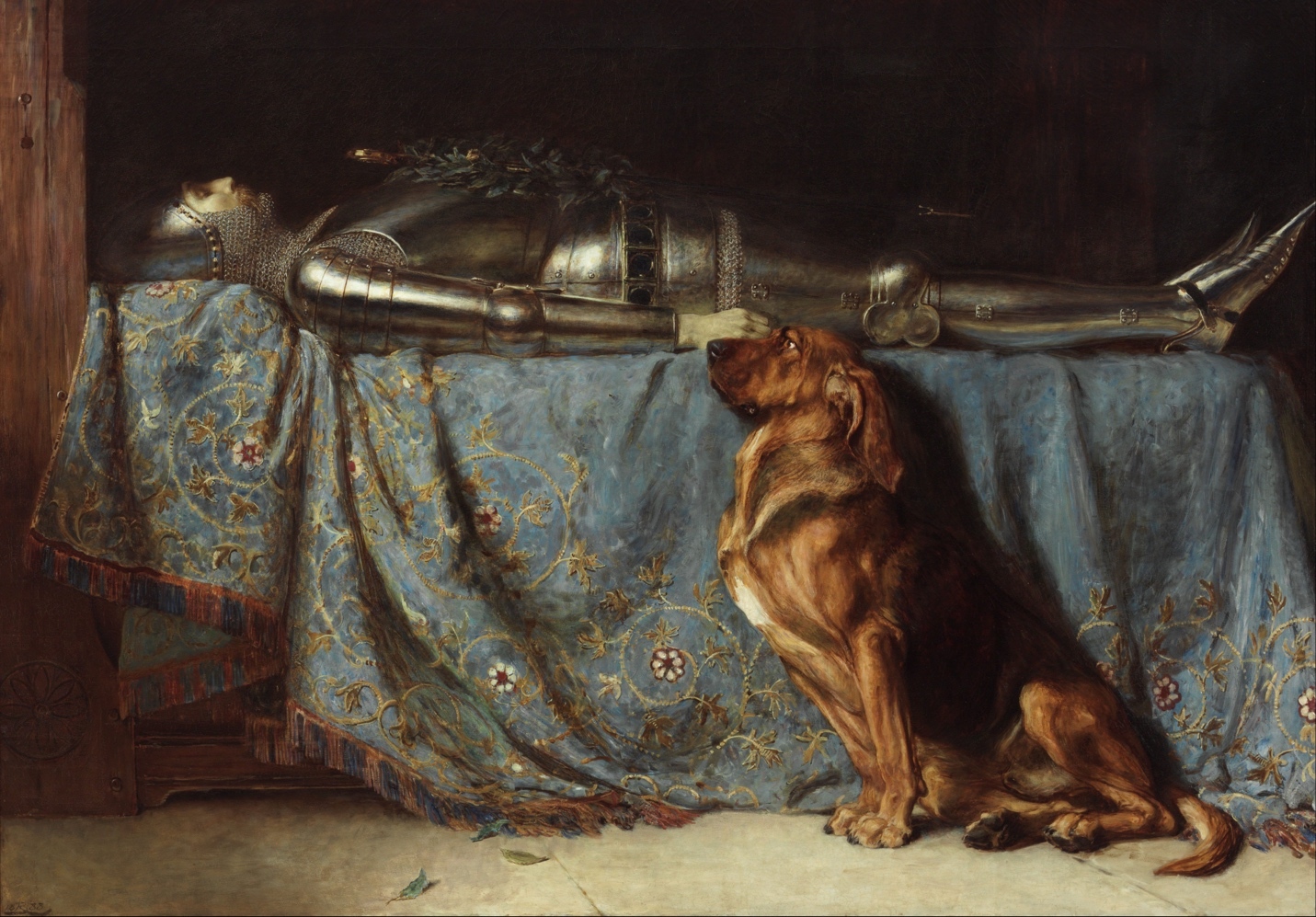
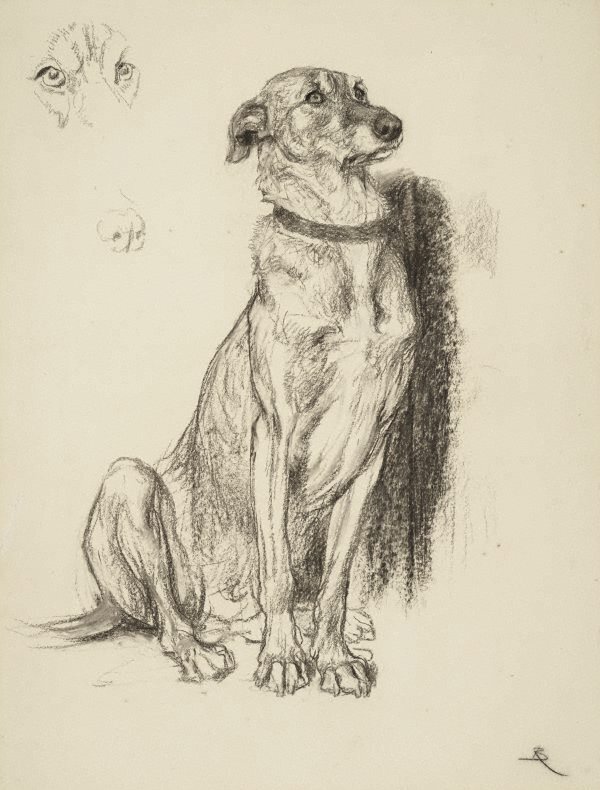
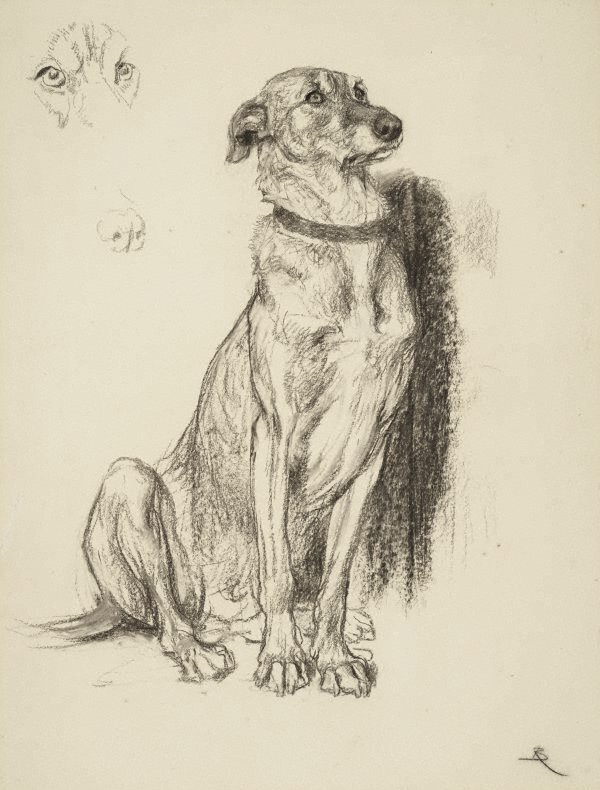
Completed in 1888, the artwork “Requiescat” portrays a “fallen” medieval knight “lying in repose, armor gleaming,” a wreath upon his head signifying death, atop a bed with a blue floral sheet. In apparent grief, “self-radiant and near him, / a royal bloodhound, / its uncomprehending eyes/ filled with pure loyalty, waiting./ Warm fur against cold steel as if/ love might cross the boundary.”1,2 The dog’s loyal stance as he keeps vigil over his late owner embodies the title of the painting: “Requiescat,” which is Latin for “may he/she rest,” being the third-person singular, present subjunctive form of the Latin verb “requiescere” (to rest or repose). The word is most commonly encountered as the first word of the traditional funeral blessing: “Requiescat in pace,” which translates “may he or she rest in peace” and which is shortened to the acronym R. I. P. This painting is part of the permanent collection of the Art Gallery of New South Wales in Sydney, Australia. The museum also has a black chalk drawing by Rivière from 1888 entitled “Study for the dog in ‘Requiescat.’”3
_is_entitled_requie.jpeg)
Given the nature of our daily work, physicians should easily understand the profound loss expressed in this poem, the death of our loved ones, those we treasure. In the end, loss is the central human experience, and learning to deal with loss remains the existential question of living. The poem quotes lines from the tribute (c. 56 BC) of ancient Roman poet Gaius Valerius Catullus to his brother, who died while traveling in a foreign land: “Hereafter, I will always sing songs saddened by your death.” But we know, Ne Jame writes, that death “is a wound no word can reach / no matter the songs we sing.” She adds, reflecting on grief, that “the heart may inexplicably soften / as we, broken, ask for a measure of grace / when we lie down in the dark.” Such is loss’s only answer, the only offering we as physicians and humans can give: we must ask for Ne Jame’s measure of grace.
This editor remembers a previous May 2023 poem entitled “Moonnight Considers Argos” by Carolyn L. Tipton.4 In this poem, the poet’s dog, Moonnight, reflects upon the fate of Argos, the beloved dog of legendary Greek hero Odysseus. Apparently familiar with the events of Homer’s epic poem The Odyssey, perhaps by having heard it read aloud, Moonnight downplays the trials—the monsters and revengeful deities—that plague Odysseus on his return home to Ithaca after the Trojan War; rather, it was Argos who suffered the greatest. Odysseus may have “had it hard,” but it was his dog “who got the short end of the stick”: in Moonnight’s canine heart, Argos’ trial was much harder than that of Odysseus; Odysseus may have faced monsters, but Argos faithfully, hopefully waited through his entire lifetime for Odysseus to come home. Aesculapius, the Greek god of healing, was guarded by a dog as a child and is pictured with a dog by his side. The Egyptian dog-god, Anubis, led people to the afterlife. In their roles as modern-day healers– therapy dogs, service dogs, companion dogs— dogs play a vital role in integrative medicine.
The editorial assistance of Cathy Chance Harvey, PhD, of Tylertown, in the preparation of this poem is gratefully acknowledged. Physicians are invited to submit poems for publication in the Journal either by email at drluciuslampton@gmail.com or regular mail to the Journal, attention: Dr. Lampton. —Ed.
Requiescat, a Prayer for My Brother
With a man and his dog,
the artist captures loss dead-on,
rendering with stark contrast
sublime light against a black background
where we see a fallen medieval warrior
lying in repose, armor gleaming,
self-radiant and near him,
a royal bloodhound,
its uncomprehending eyes
filled with pure loyalty, waiting.
Warm fur against cold steel as if
love might cross the boundary
between life and death—
even as we wish over and over
when we struggle the way
the Latin poet did upon
the crushing death of his brother
while weeping over his grave:
I am come that I may give last gifts
to the dead, take them all drenched with tears,
and for all time, hail and farewell.
And later:
Hereafter, I will always sing songs
saddened by your death.
Yet, I’m sure he knew as we do,
this is a wound no word can reach
no matter the songs we sing.
Still, how doors may unaccountably open
for those of us who have a mind to stay,
even for those of us who waiver.
How the heart may inexplicably soften
as we, broken, ask for a measure of grace
when we lie down in the dark
while dead stars scatter the heavens with light
or when we spend our days at the window watching
the driving rain shuddering the trees.
—Adele Ne Jame
Hilo, Hawai’i