
Poetry and Medicine: Match Day
Edited by Lucius Lampton, MD; JMSMA Editor
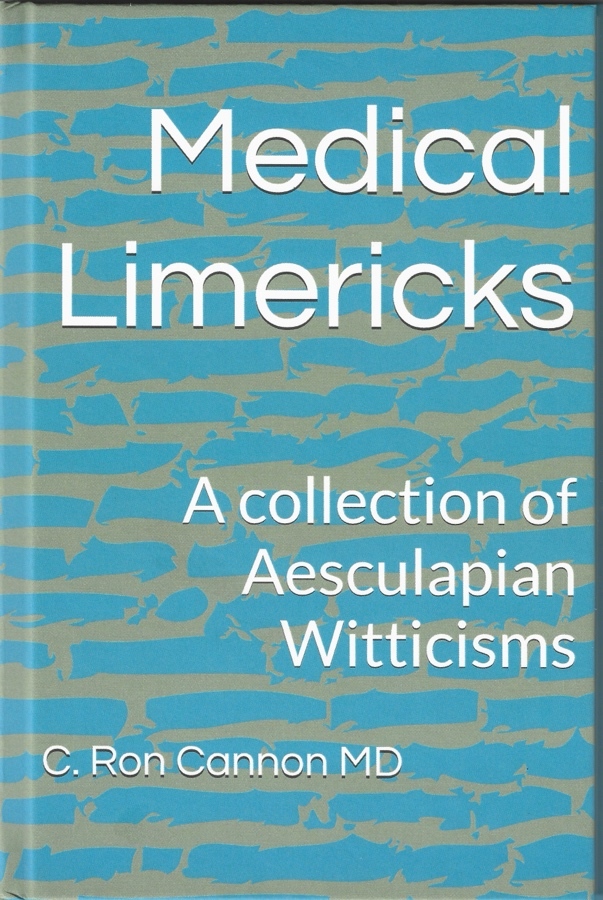
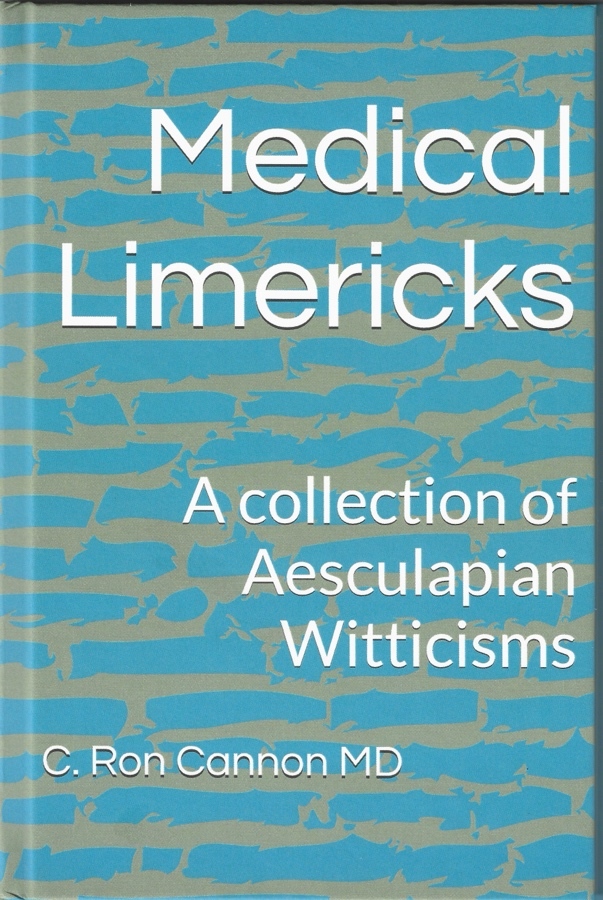
[This issue, I present a limerick which is among a collection of medical limericks recently published by C Ron Cannon, MD, a retired Jackson Otolaryngologist and a longtime member of this association, as well as a past contributor to this Journal. Dr. Cannon is a gifted physician whose work and teaching influenced many physicians and improved the lives of countless patients. His collection is entitled “Medical Limericks: A Collection of Aesculapian Witticisms”(2025).1 In this volume’s introduction, Dr. Cannon describes a limerick as “a five-line poem with a prescribed form which has become accepted over time. Within the poem, lines 1, 2, & 5 rhyme while lines 3 & 4 have a different rhyme scheme (AABBA). Limericks initially were short humorous verse, nonsensical, ribald, lewd, and pithy tales.” He adds that the form first appeared in the 1400s and was popularized by Edward Lear (1812-1888) in 19th century England. He notes the origin of the term “limerick” is not known, but thought to be related to the city or county of Limerick in Ireland. Dr. Cannon describes medicine as a “serious business” and asserts his purpose with the collection is to “bring to mind some thought about medicine from a humorous perspective.”
Dr. Cannon states that some of the almost 100 limericks in the collection took only minutes to write, while others took days or weeks to come up with just the right word or phrase. Each limerick is followed by an author’s note, which illuminates each medical topic further, with most including a scientific reference for the topic. He relates further in his introduction that limericks are well-suited to the “medical type,” as physicians are taught in our training to be “concise and brief” with any writing. “In a clinic setting, while seeing many patients in a day, we are forced to make our comments in a succinct fashion. In the short medical limerick, lines 1 & 2 state the issue, lines 3 & 4 supply more information, and line 5 sums it up.”
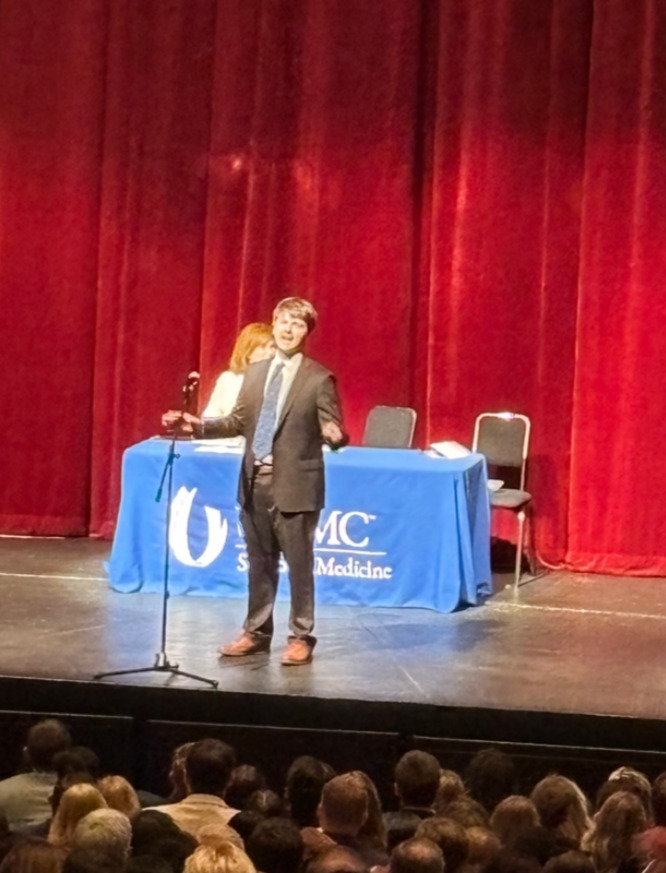
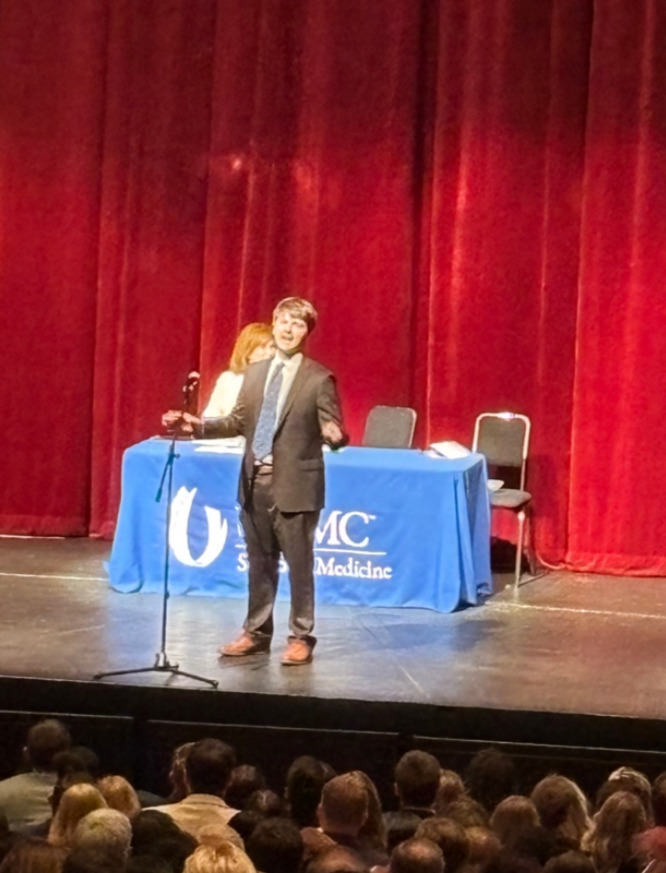
This limerick, “Match Day,” which is from that collection, reflects on this important ritual in the lives of all graduating medical students around our country. The limerick captures in its brevity much of the stress, emotion, and joy that medical students experience upon “matching” with their specialty training. Match Day, described by one writer as “a combination of the Oscars and one of Harry Potter’s Sorting Hat ceremonies,”2 is the annual event (usually the third Friday in March) where medical students nationwide learn their residency placements simultaneously. This day signals the start of their professional medical careers.
The modern residency match began in the 1950s with the creation of a centralized matching system, now the National Resident Matching Program (NRMP). Students submit a ranked list of their preferred programs, and the programs submit a ranked list of their preferred students. NRMP’s mathematical algorithm then makes the matches optimized for both parties. The system takes into account couples hoping to match in the same program or city and specialties that require two residencies. As well, some of the most competitive specialties hold their match a little before the regular match so applicants can participate in a broader match if the more competitive match doesn’t occur. On the Monday before Match Day, students are officially notified by email whether (but not where) they matched. This allows students who have not matched a second chance process in which they can promptly apply to unfilled positions in what is known as the Supplemental Offer and Acceptance Program (SOAP). Then the final matches are emailed to the students early on Match Day, prior to the day’s “Match” ceremony. The 2026 Match Day was the largest in history, featuring 53,373 registered applicants competing for a record 44,344 total residency positions. Of those, 48,050 were active applicants who submitted a certified rank-order list, resulting in 38,354 applicants matching into PGY-1 positions. The 2026 match revealed increased competition in specialty areas like anesthesia and surgical fields, while primary care saw record positions but slightly lower fill rates.3,4

Two years ago, Dr. Cannon published a book entitled “Reflections on a Career in Medicine: Notes from the field,” an original collection of thoughts and memories of the practice of medicine over forty years all expressed in poetic rather than narrative format. He revealed, in very kind comments in that book that this Journal’s regular poetry feature played a key role in his interest in poetic expression: "Oddly enough my interest in poetry was kindled by the scientific publication of the Mississippi State Medical Association. The Journal features a section on Poetry in Medicine. Many of the poems in this section have been written by Mississippi physicians. These poems were the genesis of efforts to write my own poems."5
Dr. Cannon has served as President of the American Academy of Otolaryngology/ Head and Neck Surgery and for its certifying board. He also served as Chairman of the national ENT Doctors Board of Governors. He and his wife, Beth, live on a lake in Brandon.
Physicians are invited to submit poems for publication in the Journal either by email at drluciuslampton@gmail.com or regular mail to the Journal, attention: Dr. Lampton.—Ed.]
Match Day
On the third Friday in March there is a match
Dreams and a residency slot attach
I like you! Do you like me?
Visiting a residency program as an interviewee
The match system as doctors hatch
[Author’s Note: Match Day, widely known as the “Match” dates to 1952. It pairs graduating medical students with residency programs throughout the country. A computer algorithm is used through the National Residency Match Program (NRMP). Students and residency programs each submit a rank order list of desired programs/students. In 2024, roughly 3 of every 4 students matched into one of their top three picks in the NRMP.]6
—C Ron Cannon, MD
Brandon, Mississippi