
This issue, I present a poem by the brilliant physician writer Dwalia South, MD. For the past 40 years, Dr. South has been a family physician in her birthplace of Ripley, Mississippi. She is a past President of the Mississippi State Medical Association and the Mississippi Academy of Family Physicians. She has served with distinction on the Mississippi Board of Medical Licensure and on the Mississippi State Board of Health. She has been honored as the Mississippi State Family Physician of the Year. She is a past Associate Editor and past Chair of the Publications Committee of the “Journal of the Mississippi State Medical Association.” She long wrote a popular column for this publication entitled “Una Voce,” and currently writes a column published in several Mississippi newspapers entitled “Southernism.” She is the author of the book “Una Voce,” a collection of essays, stories, poems, and letters published in 2011. She continues her busy clinical practice and maintains the Green Hills family farm, assisted by her two sons, Jesse and Jack, and a large tribe of grandchildren. In a perceptive physician-writer, something rare exists: literary talent combined with intimate knowledge. Dr. South is the best physician-writer in Mississippi; she’s also one of the most versatile and insightful physician-writers alive.
In her “Southernism” column in January, 2026, entitled “Sink Soup and Other Frugal Things,” she writes: “I am a child of the Great Depression. While technically I didn’t exist during the ‘Hard Times’ of the 1930’s, my parents certainly did, having gotten married in 1935. Folks in the American South had been mostly dirt-poor and struggling since the Civil War, so they were largely well-acquainted with survival strategies. There was very little money and few public jobs to be had. Daddy said if you were paid a dollar and a half a day that was good money back then. And, of course, there was no electricity, no indoor plumbing, no available antibiotics, and certainly no birth control!
“Everyone living out in the country raised most all their food, built their own homes, sewed most of their clothes, and perhaps got one pair of shoes a year. ‘Hand-me-downs’ were the order of the day, and even they were then repurposed into patchwork quilts, and worn-out shoe soles would be replaced with pieces of leather or cut from old tires.
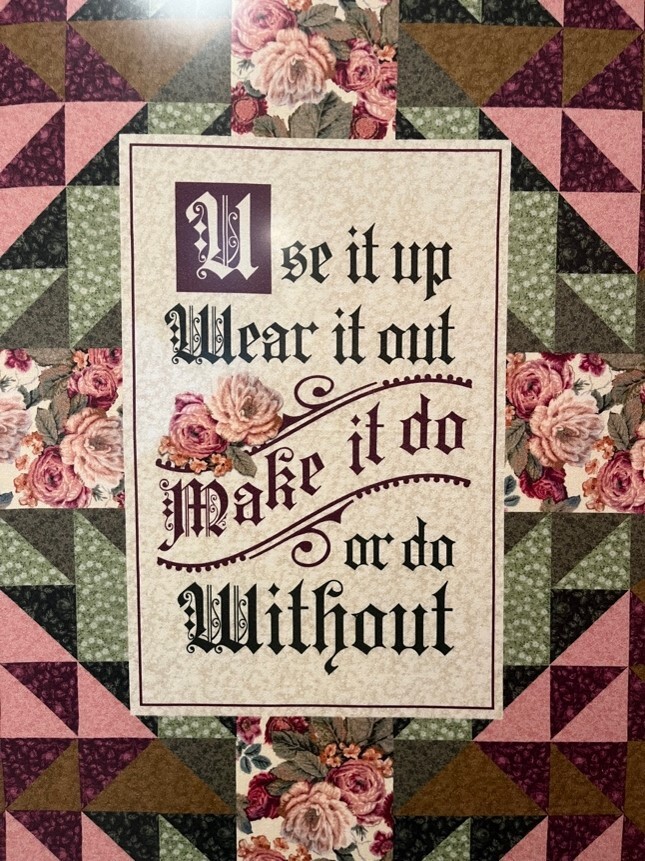
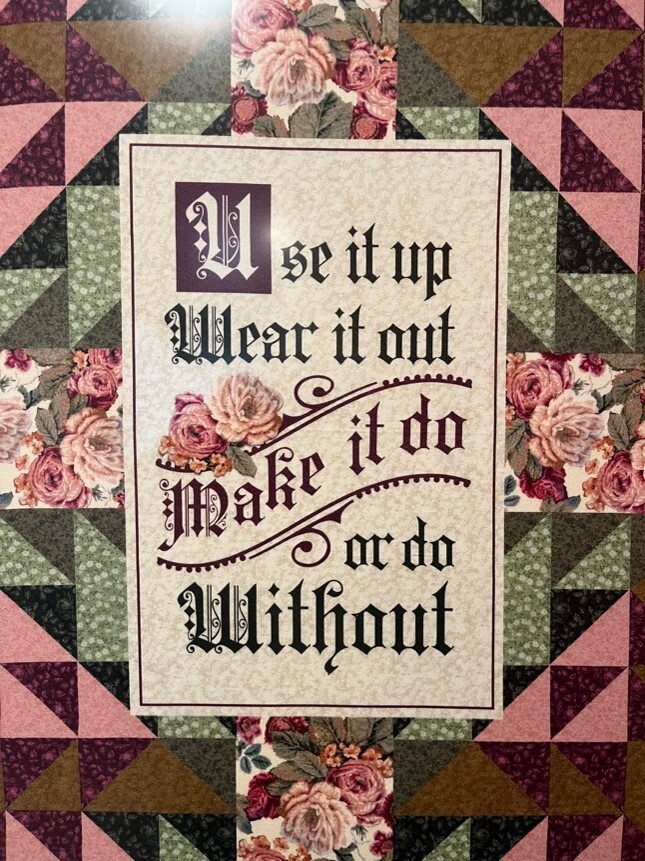
“‘Use It Up, Wear It Out, Make It Do, Or Do Without’: This phrase (first attributed to President Calvin Coolidge) was my Mother’s lifelong mantra. Even after I came along twenty years later in the baby boom of 1955, she quoted it to me quite often and practiced it diligently throughout her entire life. People have been instinctively and by necessity recycling things all throughout history, way before Miss Scarlett made that beautiful green velvet dress out of the curtains at Tara. Recycling as we think of it today became a rather trendy thing in the US in about 1970.
"I read a news article recently that set my teeth on edge… the statistic was given that an estimated 40% of the food prepared in America ends up in the trash bin. I can believe this after being around the younger folks of today who eat about half of what they put on their plates and then chunk the rest of it in the kitchen garbage can. And then they laugh at old fogy me, when I rescue things from the trash to give to the chickens!
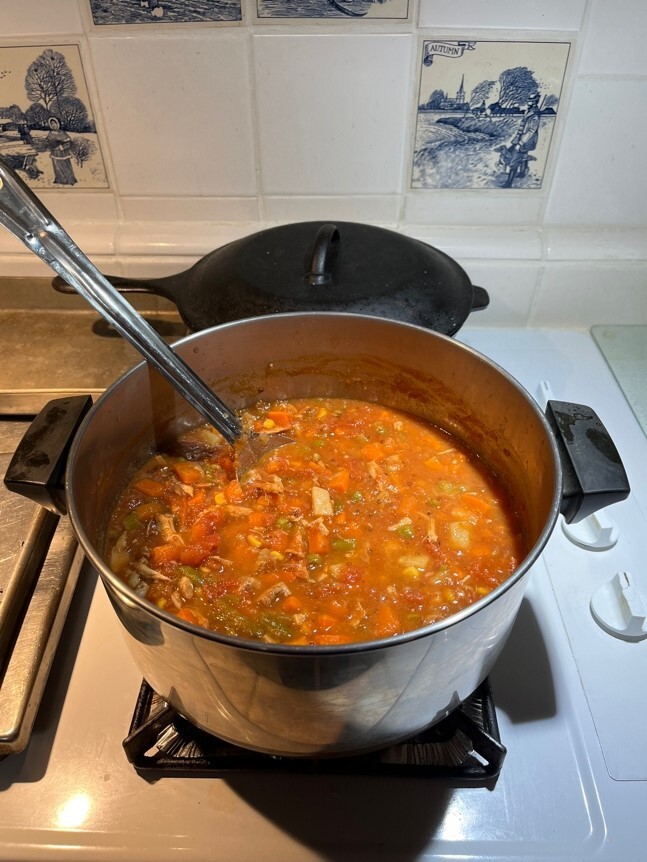
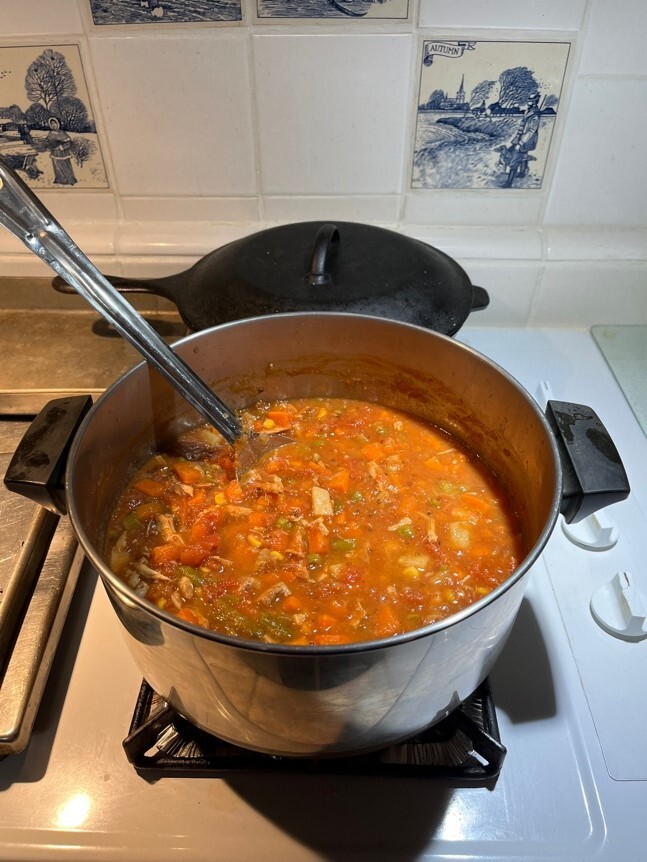
"Let them laugh, it doesn’t hurt my feelings. One example of my Mother’s food frugality did not become popular with my own children. She would save left-over cooked vegetables and meats of all types for several days in the fridge and on the weekends she would make a pot of stew out of it all which became an additional item on the table at our Sunday lunch. (Every Sunday, mind you.) My boys grew to despise it and would disparage her by saying, ‘Oh, no, Granny made her SINK SOUP again! Everything but the kitchen sink is in there!!’
"But, even her uneaten Sink Soup did not go to waste. The hound dogs loved it. Used coffee grounds were relegated to the flower beds. Egg shells went back to the chickens to supplement their need for calcium. Mother found it wasteful, almost sinful, to throw away anything that could be used when needed later on. She had a kitchen drawer dedicated to neatly folded paper and plastic grocery bags. (So do I!) Mother had a cabinet full of Mason fruit jars waiting to be refilled with tomatoes, pickles and jelly. (So do I!) …and the list goes on.
"She would only buy the kind of flour that came in cloth bags that she could later use for dish towels. Back in her heyday they came in colorful patterns which later were sewn into ‘flour-sack dresses.’ I don’t think I ever had one of those. It would have taken way too many sacks to make a dress big enough to fit me.
"Daddy also demonstrated a knack for conservation. When his work boots were completely worn out he would cut them into wide leather strips that he turned into makeshift hinges for his rabbit cages. With his old truck or tractor tires, he might turn them wrong-side-out and make flower planters for Mother. He might also throw some in our catfish ponds for the fish to nest and lay their eggs in.
"One of his favorite speeches when we would get the tractor and wagon and head out to cut a load of firewood was to remind us that this oak wood would keep us warm in several different ways…when you cut the tree down, then when you sawed it into fireplace lengths, then when hauling the big blocks home and splitting and stacking the wood, then bringing it in the house to make the most wonderful crackling fire, then in days to come when cleaning the ashes out of the fireplace, or the wood burning heater, and finally warming you up when spreading the ashes around all the fruit trees for fertilizer. It makes me warm just thinking about it all.
“My parents were the true children of the Great Depression of the 1930’s. They grew up together with the valuable lessons that life in a fragile world forced them to learn…lessons which they never forgot, and I still thank them for passing them on to me.”
What follows is Dr. South’s lovely poem on this theme entitled “Recycling Revisited.” As illustrations for this poem, Dr. South sends a photograph of a small quilt that has the “Use it Up” quote on it, as well as another photo of her mother’s famous “Sink Soup,” which Dr. South made while writing this essay. The recipe is a secret!
Physicians are invited to submit poems for publication in the Journal either by email at drluciuslampton@gmail.com or regular mail to the Journal, attention: Dr. Lampton.]—Ed.
Recycling Revisited
We always saved the table scraps to feed our pigs.
“Waste not, want not!” Mother said.
Nothing got tossed out, or went down the drain.
Not one uneaten bean or pea, nor any crust of bread
Was unimportant to the cause at hand
Which was keeping us all fed.
And fat they grew…then cold weather came.
“It’s hog killin’ time!” Daddy said.
A Saturday most wonderful and terrible was chosen.
It was so hard to see them dead.
But our jobs were only just beginning…
Tonight, for sure, we’d see no bed.
My job was to grind and season the sausage.
“If you don’t work, you don’t eat!” Daddy said.
Daddy was in charge of salt curing the hams, and
Tending the hickory fires in the smokehouse shed.
Lard rendering and cracklings were Mother’s chores,
And making that lye soap we all dread.
Next day, tenderloin and biscuits to feast on!
“Who’s turn to wash the dishes?” Mother said.
A tad of soapy dishwater went into the slop-bucket,
With a bit of corn pone, and 'tater peelings red,
With a few stray scraps and a smidge of buttermilk,
Then off to the hog parlor Daddy sped…
To feed the hungry grunting piglets waiting.
“Got to get them ready for next year,” Daddy said.
“A’course, we have to give them corn along, too…
But pig manure grows good corn, by Ned!”
Folks think recycling is such a fancy new idea.
We just called it “Keeping us all fed.”
—Dwalia South, MD
Ripley, Mississippi