
Bravely Being the Voice
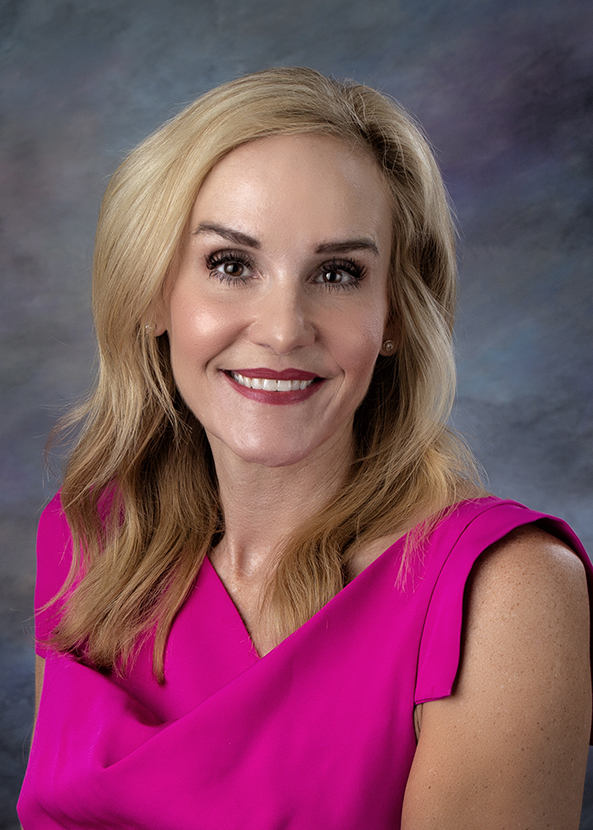
I have to be honest - until I stood up to speak and took the oath, it still didn’t feel real that I had been elected as President of the Mississippi State Medical Association. This is an incredible honor, one that I have dreamed about for a long time.
I want to say thank you to my family and my village for their unwavering support and patience. I love you more than you will ever know. And a special thank you to Becky for being my second mama and taking care of me so well. There are so many others that I want to thank but there is just not enough time and my anxiety keeps me from even trying for fear of unintentionally leaving someone out that I love and cherish. If you are in this room tonight, then you are part of my journey in some way, and for that, I am truly grateful and thankful.
And I think that when we celebrate someone’s achievements, it’s just as important to understand where they came from, their journey.
My story began in the Mississippi Delta. And if we’re getting into the details - I came into this world roaring, all 11 pounds of me.
I didn’t always dream of becoming president of the state medical association. In fact, there was a time I didn’t even dream of being a doctor. Just ask my mama. For years, she listened as I confidently told her I was going to be a “woman policeman.” Looking back, some might see that as a big leap from police officer to physician. But when I really think about it, I see the connection - I always knew I wanted to help people who needed it most. And I have a feeling my mama is relieved that I found a slightly safer way to do just that.
It was in high school that I decided to become a doctor. At the time, I didn’t know what specialty I wanted to pursue - except one. I was sure of one thing: I did not want to go into psychiatry.
Let me pause here and say - I had a magical childhood. I grew up on Montgomery Drive in Inverness, MS, a street filled with my best friends. A true Delta girl. Our days were spent riding bikes, climbing trees, paddling canoes, swimming in the town pool, and catching fireflies. We had countless lemonade stands, and life was full of adventure. It was magical.
But like many families, mine was touched by mental illness. And witnessing it up close gave me what I thought was all the experience I wanted with psychiatry. I had seen enough. I didn’t want to see any more. That was one specialty I knew I could cross off the list.
Fast forward a few years - to finally saying yes to a date with Stephen after his many failed attempts (we each have our own version of that story!), to getting engaged, getting married, and starting medical school. When the time came for clinical rotations, I kept waiting for one to really ignite my passion. But as I moved through each specialty, I never found that spark.
By the time I neared the end of my core rotations, I started to worry. What if I had made a mistake? What if I had come this far, taken on all this debt, only to realize that I didn’t love any of it? The thought of walking away from medical school, without a clear path forward, was terrifying.
And that’s when God smiled - because He always knows the plan.
My final rotation? Psychiatry. Of course, I dreaded it.
As fate would have it, the hospital where I trained had units for child and adolescent psychiatry, adult psychiatry, and geriatric psychiatry. I started on the geriatric unit, and to my surprise, I fell in love. Each unit I worked on that month captured my heart, but I also found a deep sense of empathy for the patients and, even more so, their families. I understood what they were going through.
Despite my attempts to convince myself otherwise, and even one of my mentors and biggest supporters, the late Dr. Pu - to steer me toward surgery, I couldn’t shake my love for psychiatry. I have never regretted it. Psychiatry is not just my profession; it is my calling. And, as a bonus, I always have the best stories to tell at parties.
Take, for example, my first day of psychiatry residency. I was in my first treatment team meeting, sitting in the conference room located between the nurses’ station and the seclusion room. As I eagerly soaked in all the knowledge, the seclusion door - accidentally left unlocked - flew open. Out ran a naked patient, belting Whitney Houston’s “Greatest Love of All.” Fittingly, my sister’s favorite song. If that wasn’t a sign I was meant to be here, I don’t know what was. From that moment on, I knew I was exactly where I belonged, and I still truly love it to this day.
Another passion of mine is advocacy, though that journey was unexpected. One of my most memorable patients was a “frequent flyer” with schizoaffective disorder - wickedly intelligent and an artist. She despised me upon admission but adored me when stable and ready for discharge. On her last admission, she finally agreed to a decanoate injection, as taking daily medication clearly wasn’t her thing. I was hopeful when she didn’t readmit for weeks. But my optimism was misplaced.
A month later, she came back - this time, slumped over in a wheelchair, non-responsive. No medical cause was found in the ER, so she was sent to psych. Digging through her outpatient notes, I discovered she had been given well over the maximum dose of the monthly injection by a midlevel provider. There was nothing I could do. She was placed in a nursing home, where she eventually passed away. It was a preventable tragedy, a glaring failure of the system.
That moment propelled me into advocacy. I joined what is now known as Physicians for Patient Protection and began working on scope of practice reform in Washington, D.C. While navigating the halls of Congress, searching for my next meeting, I asked for directions only to hear, “Boy, you sure do sound like me!” That’s how I met my dear friend and fellow MSMA board member, Amber Colville. Our conversation boiled down to this: “Everyone here agrees with us, but the real fight is back home in Mississippi.” So, that’s exactly where we took it.
It took a little shouting on Facebook about scope for Jennifer Bryan to find us and send us the link to join MSMA. And from that not only grew a friendship but also the formidable advocacy machine, Physicians for Mississippians, on Facebook.
I attended my first Northeast Component Society meeting, nervous and knowing no one. I slapped on my name sticker and faked confidence. The first person to approach me was Lisa Lippincott. She introduced herself as Ken Lippincott’s wife, mentioning that I had unknowingly provided emergency coverage for him while nine months pregnant after his motorcycle accident. When I asked how he was doing, she quipped in her New York accent, “Oh, he’s fine. But I told him if he ever gets on a motorcycle again, I’m leaving him.”
Then I sat at a table by Susan and Dr Jim Rish. They didn’t know me from Adam but immediately took me under their wing. Susan making me feel at home by texting me her peach cobbler recipe. Dr Rish by generously taking me as one of his own and mentoring me along the way. A true gift that I will never be able to repay. And then, as I left, the legend, the lovely Dr. Hill, who told me how excited he was to see me joining the society, and from what he observed, I would most definitely be an MSMA president, which left my jaw on the floor. Poor guy also gave me his phone number. I have used him and Miss Jean as sources of wisdom and support to this day.
I eventually became president of the northeast component society where I met the amazing Dr. Chanda Miller, whom I somehow convinced to take the helm, and she is now on year 125 of her presidency. Sorry Chanda.
So now a member of MSMA and even more than fired up about advocacy, I was pointed in the direction of the firecracker Angela Ladner, with the MS Psychiatric Association who had two choices, commit me to the state hospital because surely I was manic to be talking this much about scope of practice and mental health issues to a woman I had literally just introduced myself to on a phone call or harness that mania and mentor me, teach me all the legislative tricks and get me to the Capitol. I am ever thankful she chose the latter.
And you may be sitting there thinking “what the heck does a psychiatrist know about lawmakers and legislation?” How is someone trained to listen going to be ready to talk to legislators?
Well, working with lawmakers in organized medicine is just like being a psychiatrist - lots of talking, plenty of irrational behavior, and at the end of the day, you’re not sure if any real progress was made.
I have always said that the best advocates are those who have lived through the struggle for which they advocate for.
From those struggles have come my resolutions on PA reform, Fentanyl testing strips, substance use and mental health education in schools, and an Alzheimer’s Respite Program.
It is customary for presidents to have a platform. This is hard for me because I have so much I want to continue to fight for. I still want mental health parity. I want Kratom banned in Mississippi. I want physicians to remain the head of the healthcare team. And I will continue to fight for all of that, but I have unfinished business in the Alzheimer’s Respite Program. The Jimmy Kaigler Respite Program is named after my dear friend’s father, who died after a long fight with Alzheimer’s. But the idea and resolution came from the woes my family experienced with my Nana. Nana, or more formally known as Roseanna Beckham. My oldest, Anabelle, is named after her, as well as my son Beckham. Fierce and feisty, she was. But also, hilarious. She began exhibiting signs of dementia, and her health declined. She got to a point where she could not take care of herself. Her husband, my Pop Pop, died years before. And he worked his entire life. He worked hard. And he was a saver. He taught me how to open my first savings account. My Nana, having made too much for Medicaid, but too little to afford private long-term care, nursing home care, or sitters, was left without care. How can it be that people who work their entire lives cannot afford home care or nursing home care? They are lost in that middle ground. They either have to find other ways of at-home care or sell off all their possessions to qualify for benefits. My mom had to retire a year early from full state retirement benefits to take care of her because she wanted to do everything to keep her at home. Her wish was to die in her home. Many, many families, including Jimmy Kaigler’s, want to keep their families at home but cannot afford the care, and then the caregivers have to step in. It kills caregivers. Caregiver stress is real. I saw Tennessee successfully implement a caregiver respite program and therefore wrote a resolution to hopefully spur legislation in our state for this type of program. It was not easy to get passed. I remember calling Senator, now mayor, John Horhn on deadline day while on vacation in Disney. We were running in the rain to make our Frozen fast pass. I shoved the double BOB stroller to Stephen and told Anabelle to follow Dad and run! I talked to Senator Horhn as I ran with an umbrella, asking for his support of the bill. I don’t know that I even had to sell him much on the bill because after telling him why I was panting, he said, “You’ve got my support doc.”
The bill passed, and Senator Briggs Hopson got it funded. We even got more money allocated to the program the next year. Unfortunately, the Department of Human Services was tasked with starting it, and they are not motivated to do much with it. Despite the fact that all 40 slots have been filled and the waitlist is ever-growing, they didn’t really ask to run the program, so there is not much drive to see it grow.
So that is one of my goals this year, to get this much-needed program more advertised, more funded, and more cared for. I will also continue fighting for any legislation that threatens the physician as the head of the healthcare team. With time, more and more studies are showing that without the physician at the head of the healthcare team, costs increase, ER visits increase, and there is no influx of providers to rural areas as was hoped when giving independence.
I also want to bring more mental health awareness to the profession. I don’t want physicians to suffer in silence anymore. The Mississippi Board of Medical Licensure has led the way in removing questions stigmatizing mental illness from their licensure applications, and I want to build upon that momentum. I want systemic change. Hospitals and healthcare systems should recognize burnout, and instead of adding another module to teach physicians about resiliency, I want them to actually look at the system, identify the flaws that ultimately lead to burnout, and fix them.
Lastly, I just want to bravely be your voice. I stand before you today not just with gratitude but with a deep sense of purpose. I am here because I believe it is time to bravely be the voice of physicians…. To speak truthfully and loudly about the challenges we face, to champion the value of our profession, and to ensure that those who dedicate their lives to healing others are heard, respected, and supported.
We are entering a time of profound change. The challenges we face are not small - our profession is under threat, our voices too often dismissed, and the value of physicians diminished in conversations where we should be leading. I know many of you feel exhausted, discouraged, and even demoralized.
But as a psychiatrist, I’ve learned that in the darkest of times, growth begins. That healing starts where pain resides. And that strength is not the absence of struggle - it is born in the midst of it.
We are healers. Scientists. Advocates. We are not just trained to survive pressure - we are shaped by it.
This is not the moment to retreat. This is the moment to rise.
We must unify - not just in defense of our profession, but in service of something far greater: the patients who trust us, the communities who need us, and the future physicians who are watching us right now to see what kind of legacy we will leave.
So, let us lead with wisdom and courage. Let us speak with clarity and conviction. And let us remember that though the winds of change may be fierce, we are not without an anchor - our training, our ethics, and our oath to serve will always ground us.
I am honored to take on this role - not because the path ahead is easy, but because it is worthy of our very best.
The work begins now.
LET’S GO
Thank you.