
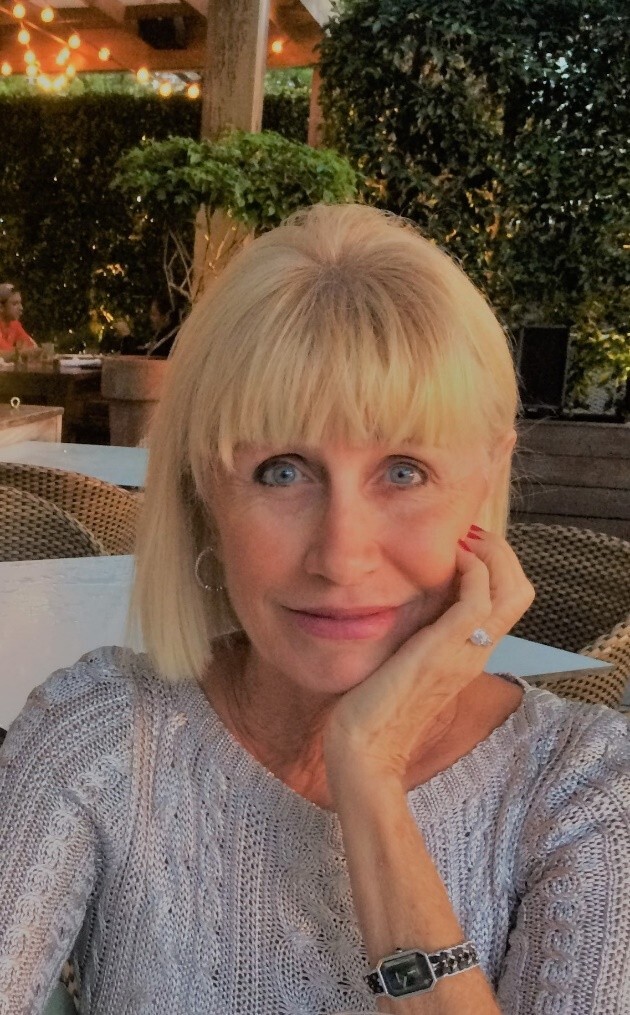
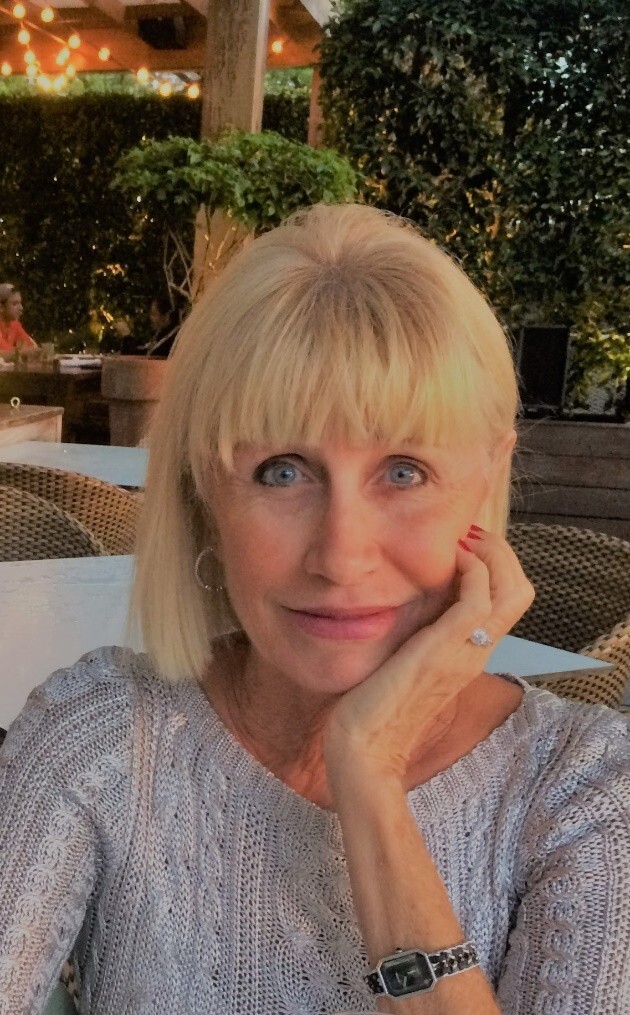
This month, I offer a lovely poem, the eighth in a series, by Adele Ne Jame, a first-generation Lebanese American who has lived in Hawai’i since 1969. She has written extensively about Hawai’i and Lebanon in her poetry collections, including Field Work, The South Wind, Poems, Land and Spirit, and in her new manuscript, First Night at the Beirut Commodore and Other Poems. She has taught poetry at the university level in Hawai’i since 1986, and she has served as the Poet-in-Residence at the University of Wisconsin-Madison. Her work has been published in journals such as the Georgetown Review, Ploughshares, Atlanta Review, Nimrod, the Denver Quarterly, Poetry Kanto, and the Notre Dame Review. Her many awards include a National Endowment for the Arts in Poetry, a Pablo Neruda Poetry Prize, a Robinson Jeffers Tor House Prize, and an Eliot Cades Award for Literature. Her poems have been exhibited as broadsides at the Sharjah/ Dubai International Biennial, UAE, and at the Arab American National Museum, Dearborn, Michigan.
The poem below describes the artwork of contemporary British artist Dame Tracey Emin (b. 1963). Born in Croydon, a district of south London, and raised in the seaside town of Margate, Kent, Emin is known for her dynamic and autobiographical artwork. She produces in a variety of media, including drawing, painting, sculpture, film, photography, neon text, and sewn applique.
With honesty and deep feeling, her art draws on personal experiences of illness, intimacy, and sexuality to confront broader concerns about women’s bodies and health. Emin suffered from aggressive bladder cancer, and, contrary to medical expectations, she survived after a long illness and is thriving.
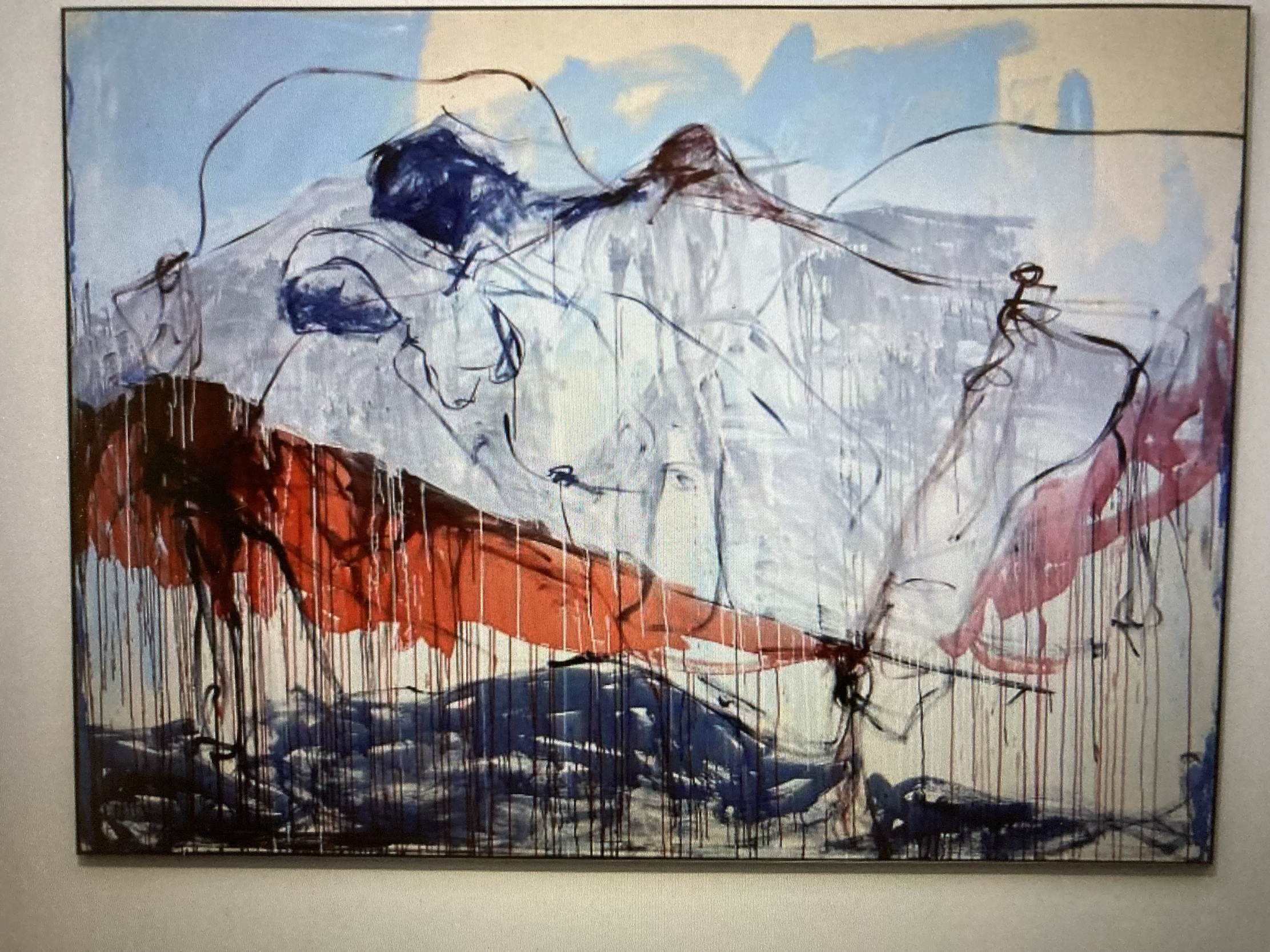
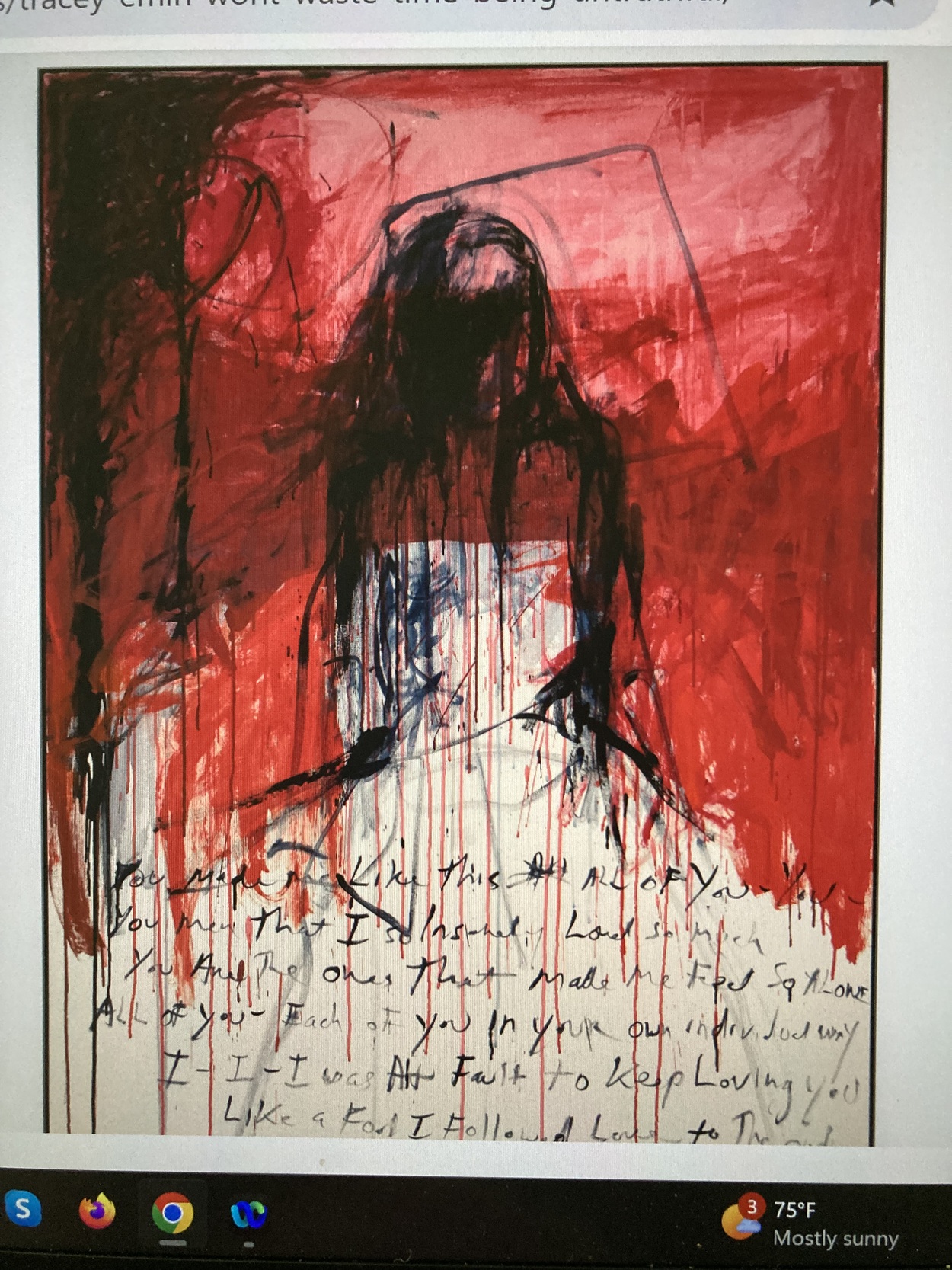
In the beginning of the poem, the speaker makes reference to Emin’s painting, I Followed You to the End (2024), a work recently acquired by the Yale Center for British Art. In the second stanza, the speaker describes Emin’s painting The Saddest Tomb as “a sickbed in a swath of / blue below it as if engulfed by waves, / unreachable in the kingdom of the ill.”
.jpg)
In addressing the artist in stanza three, the speaker celebrates the “heady victory / when you plant the flag of your paintings / at the summit to praise galore” and “repeat to yourself Bowie’s lyrics: / surely God will look the other way today,” a reference to English singer and songwriter David
Bowie in his song, “God Knows I’m Good.” The title of Bowie’s song becomes Emin’s “exhibition title” for her snow-white neon text artwork first exhibited in 2009.
The editorial assistance of Cathy Chance Harvey, PhD, of Tylertown, in the preparation of this poem is gratefully acknowledged. Physicians are invited to submit poems for publication in the Journal either by email at drluciuslampton@gmail.com or regular mail to the Journal, attention: Dr. Lampton.—Ed.
.jpg)
I Followed You to the End, the Series
I love painting but I’m still really afraid of it.
Dame Tracey Emin
The artist says, the most beautiful thing
is honesty. Disarmingly beautiful, irreverent,
unfiltered. True north. Rendered with
impulsive black strokes and raw crimson,
one canvas reveals a solitary woman,
the face obscured by the force of
her ebony strokes, hair falling
to her hips. Or are they wild blackbirds or
crows, perhaps, flailing about her body,
portending something fearful,
maybe blind love, the cost of it
or love lost— but not as when
in ancient burial sites human remains
are found of lovers clutching each other
in a lasting embrace.
Or is it the fear of
the body itself when it betrays us,
the body as battleground,
the body as motif, or is it the battle of
something called cancer, a stoma,
a retrospective of intractable suffering.
Another image: a sickbed in a swath of
blue below it as if engulfed in waves,
unreachable in the kingdom of the ill.
I saw death, you said. It was right in front of me,
but the fire of want was still aflame
in the darkness. O, how the body is caught
between joy and suffering. This is no metaphor.
Still, I imagine those graphic, salty lines as
shuttered flocks of crows, the tricksters,
those who mock all, the true cross—
that and knowing nothing will ever be the same.
Yet, for the artist
there is the counterpoint of a pure sky,
a child’s seaside town of Margate,
those tide markers of comfort and
the work, an estuary of imagination
and truth. This for the woman you are—
relentless in your climb up the mountain
risking it all and showing us the way
towards a rarified, heady victory
when you plant the flag of your paintings
at the summit to praise galore,
having left behind your own regrets,
and all those early recriminations (being called
wild banshee, provocateur by the critics).
Still, you choose clarity instead of secrecy
every time. Confident in the gift of grace,
you repeat to yourself Bowie’s lyrics:
surely God will look the other way today.
Then you furiously scrawl in white neon
your exhibition title for all of us to see:
Only God Knows I Am Good.
And finally, as if resting
on the twilight banks of the River Solitude,
you take refuge waiting for the slow
refueling fires of the human heart.
—Adele Ne Jame
Honolulu, Hawai’i
Notes
“The kingdom of the ill,” from Susan Sontag’s, Illness as Metaphor, Farar, Straus and Giroux, New York, 1978.
I Followed You to the End, White Cube Bermondsey, London, UK, Sept. 2024.
Only Good Knows I’m Good, Lehman Maupin Gallery, New York, Nov. 5- Dec. 9, 2009.